
Chamblee Directory Shelves by Year
The strongest Chamblee city directory search starts at the DeKalb History Center, whose finding aid separates Atlanta, suburban, and county editions. Chamblee may appear under more than one heading because directory geography followed publication markets and postal service, not today’s municipal boundary. The confirmed shelves range from incomplete early Atlanta volumes to twentieth-century suburban books and telephone directories. Check the exact volume before traveling because the runs are incomplete.
| Collection | Years | Where Held | Access |
|---|---|---|---|
| Atlanta single-volume directories | Selected 1887-1953 | DeKalb History Center | Appointment; incomplete |
| Atlanta city and suburban volumes | Selected 1956-1990 | DeKalb History Center | Check finding aid |
| DeKalb-only directory | 1939 | DeKalb History Center | Appointment |
| Atlanta directory microfilm | Guide references years beginning 1902 | Decatur Library | Library reference help |
| Haines Criss-Cross | 1946-2016/17 | Fulton Central Special Collections | Walk-in |
| Chamblee telephone books | Confirmed examples, 1942-1975 | Library of Congress | Free images and OCR |
The DeKalb book is a one-year snapshot, not a continuous series. Missing years require census schedules, telephone books, newspapers, voter oaths, or archive files. No collection should be called complete.
Telephone coverage deserves its own check. Confirmed Chamblee examples survive for 1942-43, March 1950, June 1951, September 1954, June 1957, November 1965, November 1967, December 1971, 1972, and November 1975. Later issues were published by Southern Bell. These books can place a subscriber or business at an address in years when the broader city-directory shelf has a gap. They also reflect telephone service, so a household without a listed line can be absent even when it remained in Chamblee.
Chamblee's Unusual 1939 Directory
The DeKalb History Center reports that its 1939 DeKalb directory may be the only county-specific edition ever published. It is a useful Chamblee snapshot just before the 1940 census. Search the alphabetic listing, record each abbreviation and address, then compare the census name, age, occupation, and household members. Agreement across both sources is stronger than either source alone.
The book also helps bridge a national gap left by the mostly lost 1890 census. It cannot prove every person at an address was listed. Publishers missed residents and often centered one named adult. Absence calls for another source, not a claim that someone had left Chamblee.
Note: Save the title page and abbreviation key with an entry so its date, source, and symbols remain clear.
Chamblee Records at the History Center
The DeKalb History Center special collections hold directories, newspapers, photographs, court-related files, and Chamblee subject material. Original voter oath sheets from 1936-40 cover Chamblee, Cross Keys, Doraville, and Shallowford districts. They may show an address, occupation, birth date, ethnicity, and transfer or tax clues. Access is by archive appointment.
The same archive preserves Chamblee High School images from the late 1940s through the late 1960s, Musicland photographs and letters, and oral histories. These sources add context to a name found in a city directory when a date, address, or occupation narrows the search.
The William Black collection covers school sports, cheerleaders, proms, portraits, and Chamblee Lodge. The Ruth Bean and Musicland material preserves photographs, letters, and ephemera from the 1950s and 1960s. Neither is a household roll. Still, a dated school or community image can test whether a family was present during the span suggested by directory entries. Cite the collection and item, and take care with details about people who may still be living.
The DeKalb genealogy guide shows another local access route.
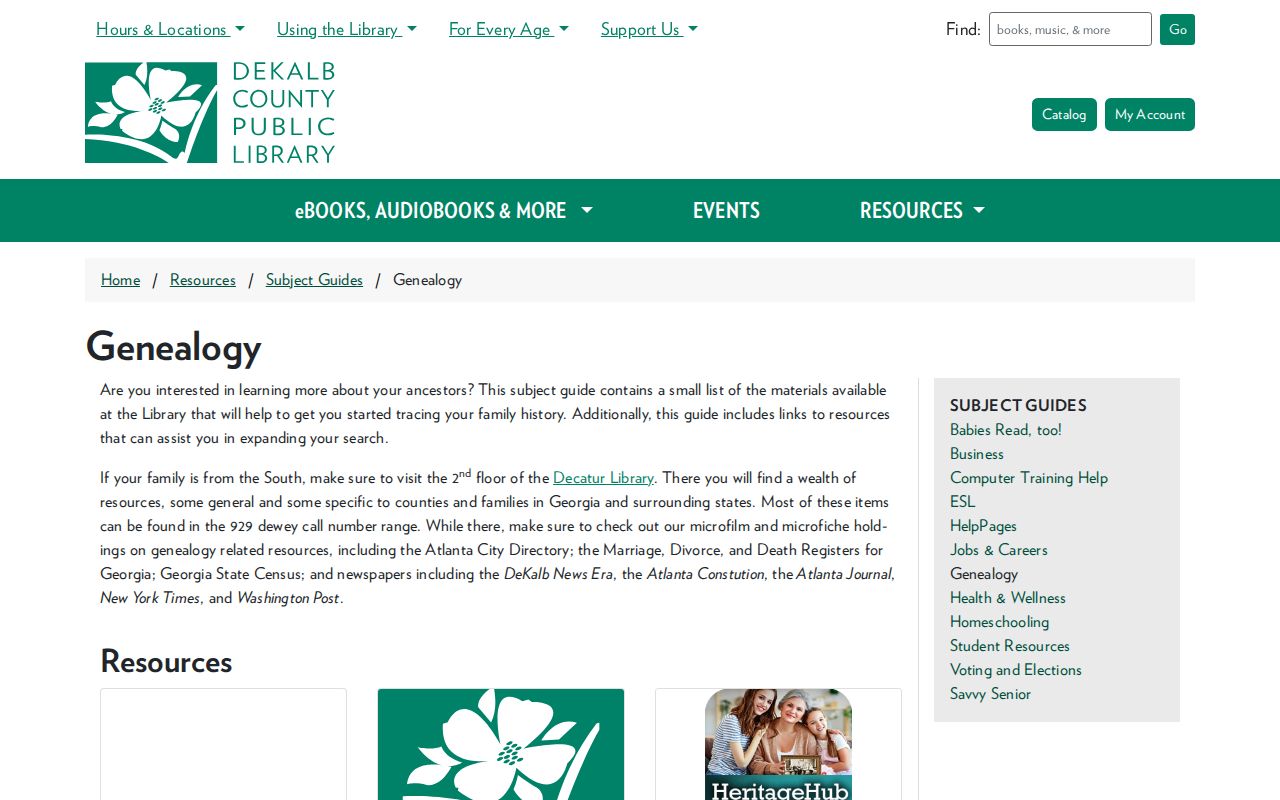
The captured page connects directory work with DeKalb microfilm and reference collections.
Chamblee Library Genealogy Access
The Chamblee Library provides reference help, public computers, and GALILEO access. Wider county holdings include Atlanta directory microfilm, Georgia census microfilm from 1820 through 1920, death indexes, marriage and divorce registers, and newspaper microfilm. The branch is a practical fallback when a database requires library access.
Check the branch page for current service details.
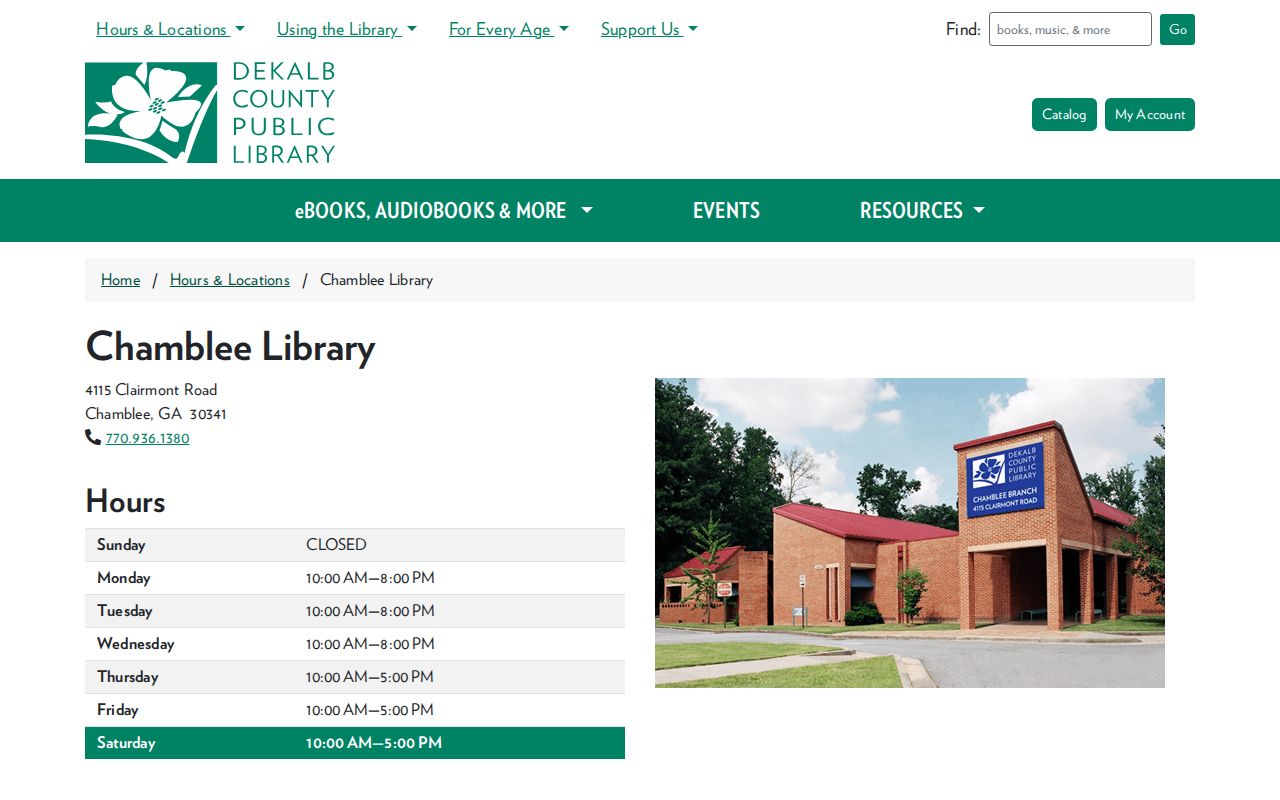
The image identifies the local branch that can route a directory question to the right county collection.
HeritageHub obituaries and death notices, local newspapers, and cemetery records can test whether a missing entry reflects death, a move, or a change in publication coverage.
Reading Chamblee City Directory Entries
An inspected 1971 Southern Bell page headed “Chamblee-Chandler” shows the local format. It compresses a surname or business name, courtesy title, street number and name, locality code such as Cham, Drvi, or Dec, and a telephone number. A “See also” note points elsewhere. The 1954 book grouped Chamblee with Doraville and Dunwoody, proof that telephone geography was not a city boundary.
| Name | Surname, given name or initials, sometimes with a spouse |
|---|---|
| Work line | Occupation and sometimes employer or business address |
| Home line | h for home or r for rooms or residence, then an address |
| Telephone detail | Locality code and telephone number in later books |
| Family clue | wid may identify a widow and deceased spouse |
- Criss-cross directory
- An address-first book arranged by street and house number.
- Householder index
- A listing centered on a named adult, not a full count of occupants.
- Abbreviation key
- The book’s guide to short forms, codes, occupations, and marks.
Some historic books carry racial labels that reflect segregated publishing. Cite the record accurately and explain that context. A listing is evidence of a publisher’s association between a name and address, not proof of a full household.
Street names also need historical control. New Peachtree Road was once Main Street and was paved in 1926. Buford Highway was paved in 1936. Search both the old and current street forms when an address seems to vanish. For land research, carry the parcel legal description beside the directory address because a street name can change while the land lot and district remain stable. Locality codes likewise require the key printed in that volume rather than a modern guess.
Why Chamblee Volumes Split
Atlanta and suburban entries shared one volume until 1956. Growth made that book too large, so later editions split city and suburban coverage. Chamblee researchers must check the category for each year. The split is a publication change, not evidence that a family moved.
| Year or era | Directory event |
|---|---|
| 1859/60 | First Atlanta directory |
| 1939 | DeKalb-only snapshot |
| 1946 | Start of confirmed Haines holdings |
| 1956 | City and suburban volumes split |
| 1991 | Atlanta publication ceased |
| 2016/17 | End of confirmed Haines holdings |
The later timeline explains why telephone books and reverse directories become central to a Chamblee city directory trail.
Digital Chamblee Directory Companions
The Georgia Archives Virtual Vault and Digital Library of Georgia provide free historical images and indexes. Georgia death certificates through 1943 can confirm a death and family link after a directory name disappears. A statewide project digitized many Georgia directories, but a Chamblee-specific volume must be confirmed in live results.
Modern certified records follow eligibility rules. The official Georgia request route explains that separate process.
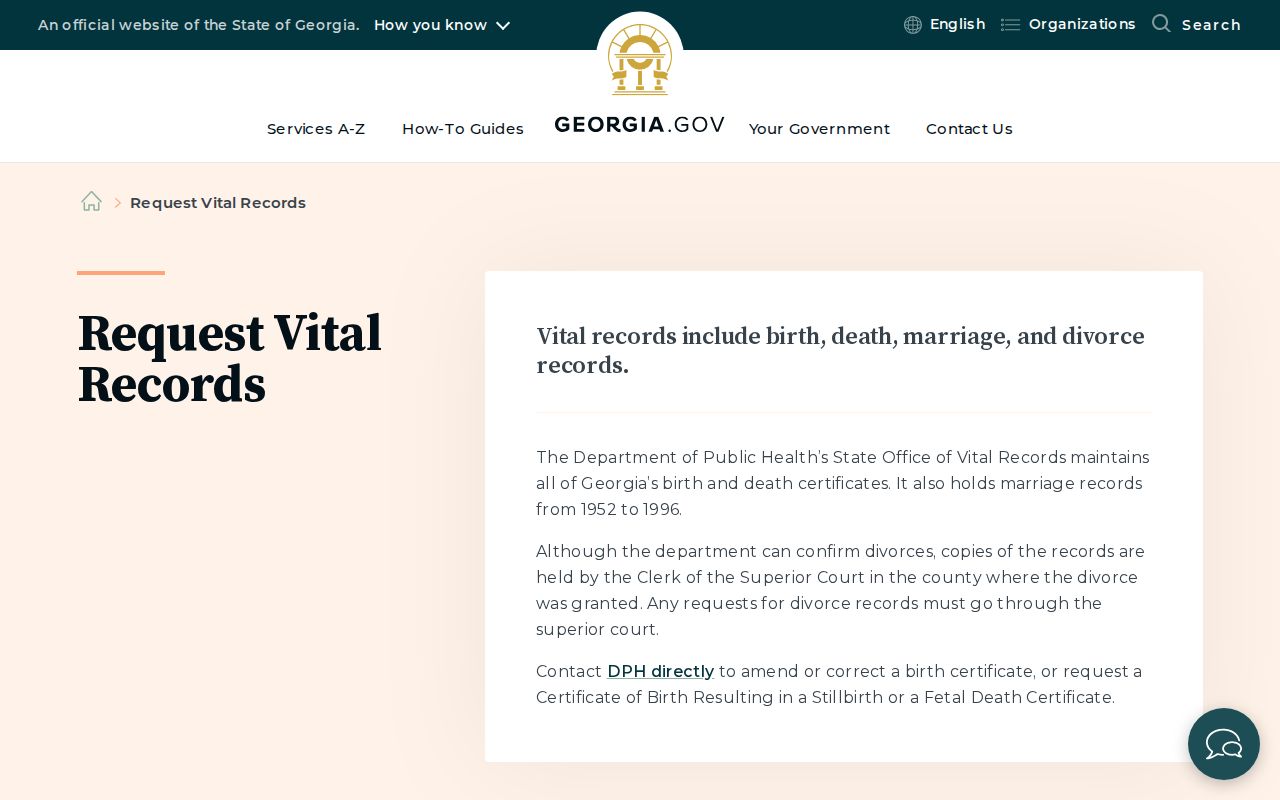
The image marks the point where an open historical clue may lead to a restricted certificate request.
Georgia DPH lists the request channels for eligible applicants.
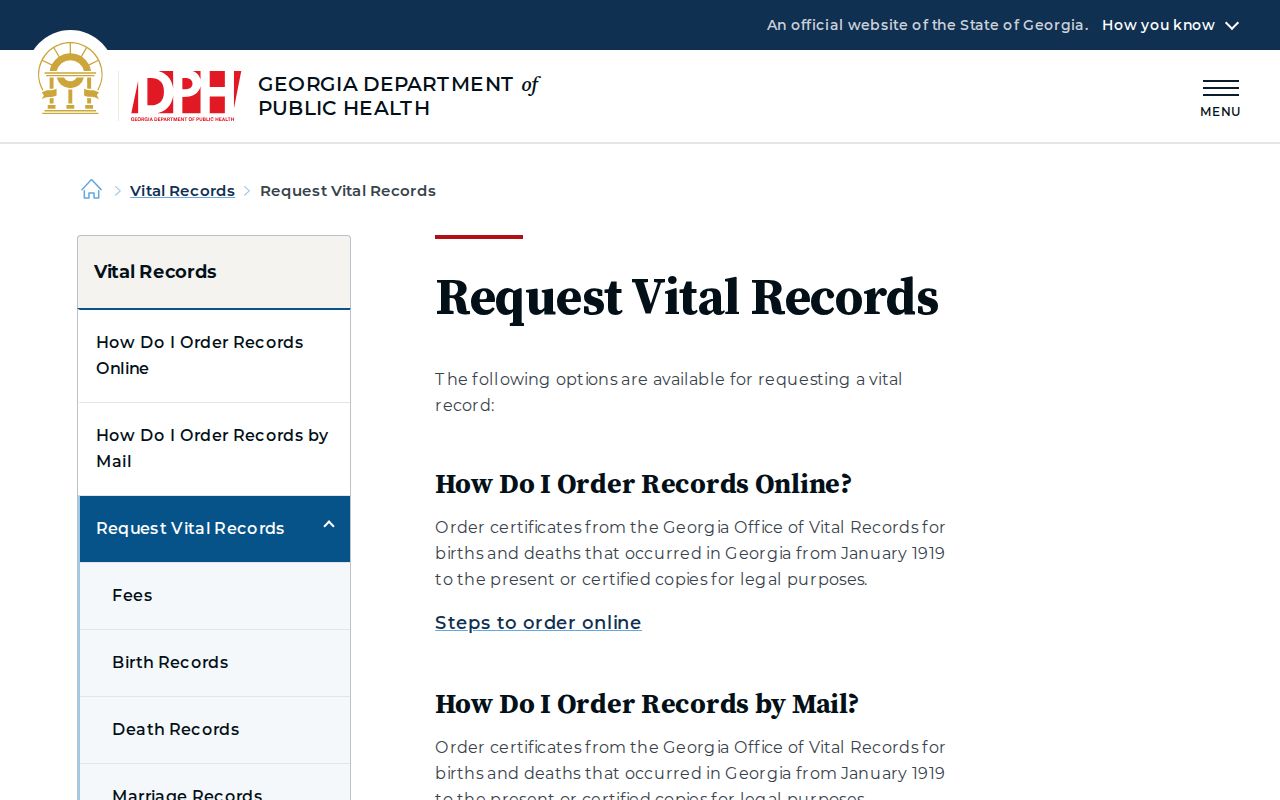
The captured page distinguishes public index research from ordering an official copy.
Requesting Missing Chamblee Records
When a city-created file is not online, use Chamblee GovQA or send a narrow request to the city clerk. Give the series, date range, subject, address, permit or case number, and preferred format. The Georgia Open Records Act generally calls for a response within three business days. O.C.G.A. § 50-18-71(j) does not require an office to create a new report that does not exist.
The Attorney General provides official request guidance.
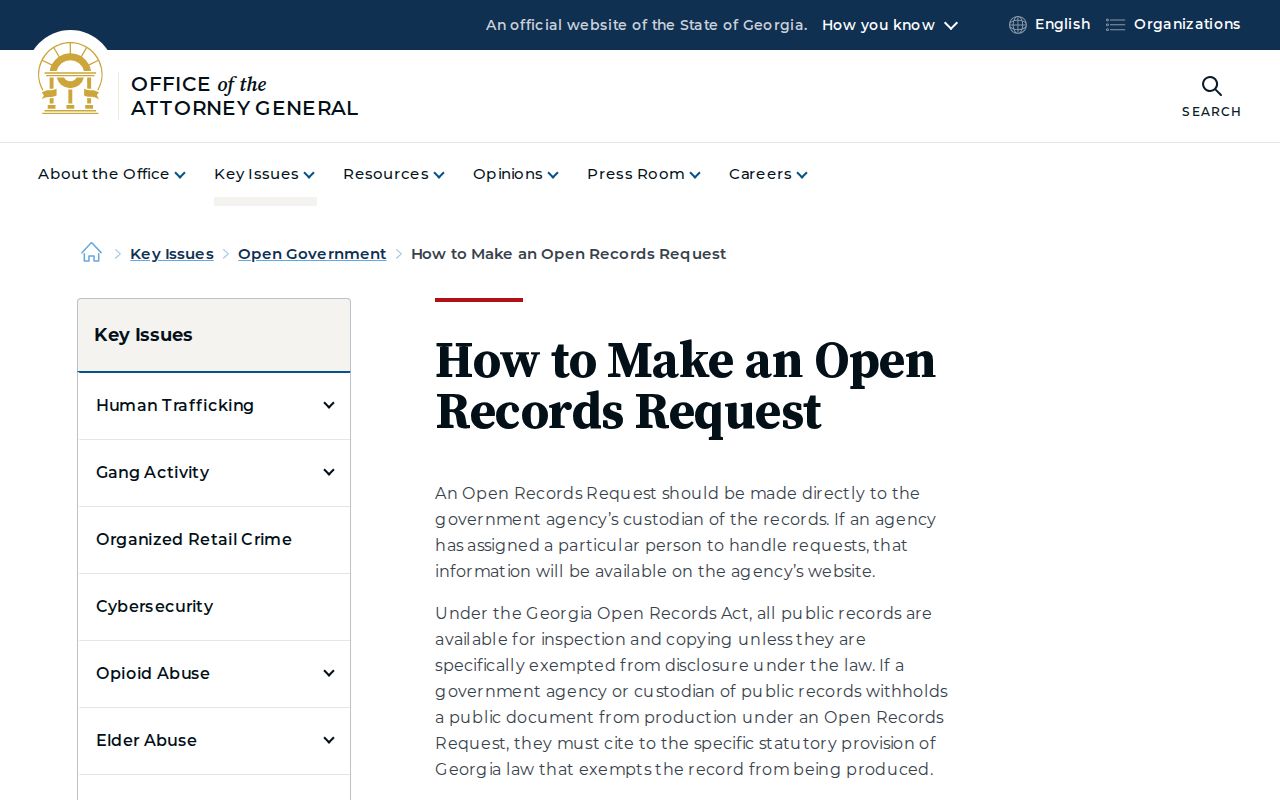
The guidance supports a focused fallback when an archive catalog does not answer the question.
Trace Chamblee Families Across Directories
Work one volume at a time and preserve the original spelling. The city directory trail becomes stronger when each change is paired with a census, obituary, probate file, deed, or cemetery record. Build a dated chain in which the name, spouse, occupation, and address agree often enough to distinguish people.
- Find the earliest likely entry and copy every field plus the page citation.
- Move forward and backward through available years, marking moves and gaps.
- Use Haines criss-cross books to search an address and compare nearby names.
- Pair 1939 with the 1940 census and a pre-1950 book with the 1950 census.
- Test a disappearance in obituaries, probate files, deeds, and cemetery indexes.
Chamblee Baptist, Nancy Creek Primitive Baptist, and Pierce Drive cemetery records can separate people who share a name. Probate images may identify heirs, residence, witnesses, property, and dates. Some images require a free account or affiliate-library access.
FamilySearch’s Georgia probate collection spans 1742-1990 and includes DeKalb material within a large image set. Related church-marriage, county-marriage, birth and christening, will, deed, and land collections can extend a trail, but catalog coverage and image access vary. Start with the exact directory name and year, then add the spouse, occupation, address, and known relatives. A probate residence or heir list can resolve which same-name person disappeared from a later Chamblee city directory.
When the trail reaches early DeKalb history, account for two genuine holes. The courthouse fire of January 9, 1842 destroyed nearly all county records, with only one official Superior Court volume reported to have survived. The 1890 federal census was also mostly lost after fire damage. Later deed recitals, church and cemetery files, family papers, newspapers, voter oaths, and the 1939 directory are evidence-based bridges. They cannot recreate a record that no longer exists.