
Chamblee Previous Residents by Era
The best source depends on the date being studied. Start with current parcel data for the land, then move into deeds for owners and directories or census schedules for occupants. Chamblee’s shifting city limits and postal labels make the legal description more durable than the street line alone.
| Source | Years covered | Where held | What it adds |
|---|---|---|---|
| Landmark deed index | 1979-current | DeKalb Clerk web portal | Parties, instrument, book/page, legal terms |
| Older deed books | Before 1979 | Clerk counter and archives | Ownership chain beyond the web cutoff |
| DeKalb directory | 1939 | DeKalb History Center | Name, occupation, and address snapshot |
| Atlanta and suburban volumes | Selected 1887-1990 | History Center and library | Household changes across directory years |
| Haines criss-cross | 1946-2016/17 | Fulton Central Special Collections | Street and house-number access |
| Federal census | Public through 1950 | NARA and library databases | Enumerated people and relationships |
| Chamblee permits | Retained city files | Planning, iWorQ, or records request | Work dates, owners, applicants, contractors |
For a recent transfer, begin with appraisal and Landmark. For mid-century occupants, try the address-first run and nearby census years. For an earlier house, combine physical deeds, the available directory years, maps, newspapers, cemeteries, and family papers. Never claim an exact permit start year because the research did not establish one.
Start Chamblee History with Parcel
The DeKalb Property Appraisal portal converts the present address into a parcel ID, owner, mailing address, situs address, legal description, and latest deed reference. Save the whole record. The owner mailing address may differ from the house being studied, and neither field proves who occupies the building.
Next, use DeKalb GIS and Mapping to confirm the mapped parcel and current deed or plat book/page. Mapping staff can help with an address or parcel ID, but deed copies come from the Clerk. GIS boundaries are tax-map lines, not a survey. The first two digits of the assessor parcel ID can also help locate matching title abstracts in DeKalb History Center archives, a distinctly local bridge from a modern card to paper research.
Keep a research log with the date checked, parcel ID, exact street form, legal description, owner, book/page, and source. That log prevents two nearby lots or two people with the same name from being blended into one story.
Trace Chamblee Owners Through Deeds
The Landmark Web Official Records Search offers name, document, book/page, parcel, record-date, instrument-number, and legal searches. Its public web coverage begins in 1979. A result may show indexed parties and roles, document type, recording date, instrument number, book/page, legal terms, parcel ID when indexed, and an image link where available. Recording date is not always execution or possession date.
- Pull the current owner, parcel ID, legal description, and latest deed reference from appraisal.
- Open the current acquisition deed. Record the grantee who received the property and the grantor who conveyed it.
- Search that grantor as a grantee in an earlier period. Compare the land description, not just the name.
- Repeat backward through each transfer. Note gaps, corrective instruments, estates, and changes in the stated land description.
- Once the chain crosses 1979, use physical grantor/grantee indexes and deed books at the Real Estate Division or archives.
- Grantor and grantee
- The grantor conveys an interest; the grantee receives it.
- Chain of title
- The linked sequence of recorded transfers for the same land.
- Legal description
- The land identity stated by lot, block, subdivision, land lot, district, or metes and bounds.
- Criss-cross directory
- A volume organized by street and house number, useful when the name is unknown.
Index searching is free. The courthouse public-access room is the offline fallback, and mailed copy requests require the stated book type and book/page. Verify current copy charges with the Clerk before ordering.
Chamblee Deeds Cross the 1979 Line
The web cutoff is one of the most useful numbers in a past-occupant search. It does not mean DeKalb land records begin in 1979. Surviving real-estate books reach back to 1842, while older work requires the physical indexes and books. The statewide GSCCCA portal adds name, book/page, property, lien, plat, and paid address-search options, but it does not erase the need for clerk-held originals.
The deeper endpoint is the courthouse fire of January 9, 1842. Nearly all early DeKalb records were destroyed, and only one official Superior Court volume reportedly survived. A continuous deed chain before that loss may not exist. Later deed recitals, reconstructed abstracts, church and cemetery records, newspapers, and family papers are honest bridges.
Learn more from the DeKalb History Center courthouse history.
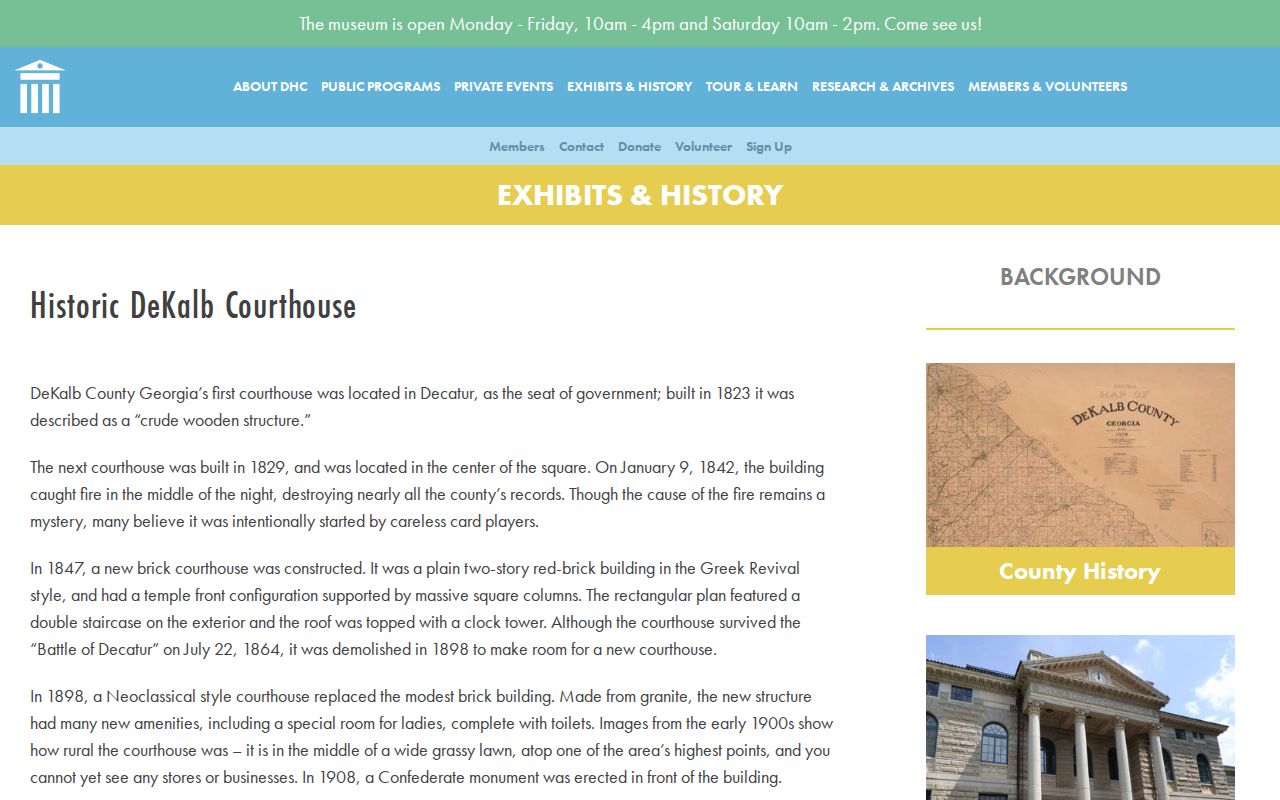
The captured history page explains why an early missing deed is an archival loss, not a portal-search failure.
Find Chamblee Past Residents Address First
Ownership is only half the trail. The confirmed Haines criss-cross collection at Fulton Central Special Collections runs from 1946 through 2016/17 and is arranged for address-first work. The 1939 DeKalb directory offers a separate county snapshot. Atlanta city and suburban volumes were combined until 1956, when the set split because one book had grown too large.
Search the exact street and house number in a reverse volume. Record every listed adult or telephone subscriber, the printed locality code, and neighboring addresses. Then check the alphabetic section for spouse, occupation, and other clues. A listing shows that a publisher associated a named person with the address during compilation. It is not a complete census and may miss renters or anyone without a listing.
The full collections and entry abbreviations belong on the Chamblee city directory page. For backward address work, the point is to bracket change: the last year one name appears and the first year another appears.
The library’s official holdings page shows the confirmed metro address-first source.
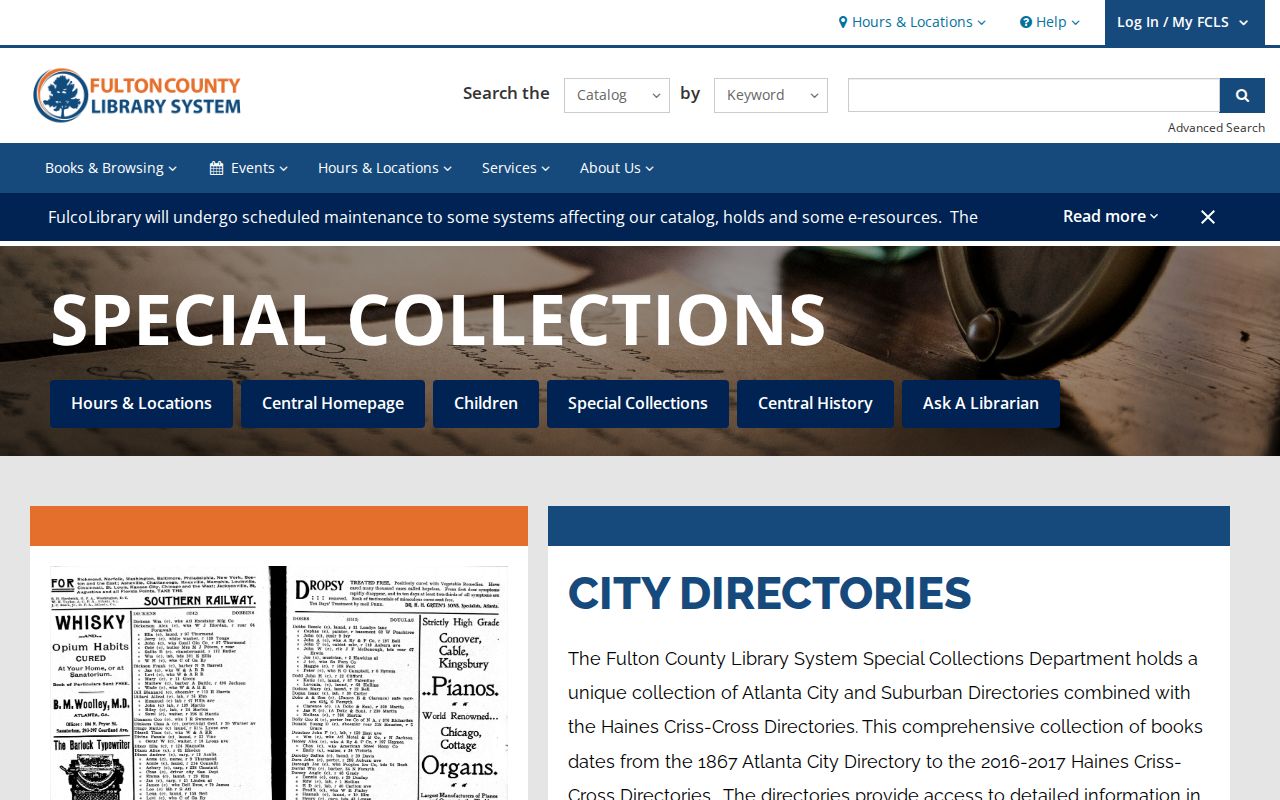
This collection reaches eras in which the deed chain alone cannot reveal occupants.
Pair Chamblee Directories with Census
Directories narrow a year, while a public census can name people in the household and state relationships. Pair the 1939 DeKalb directory with the 1940 census. Pair the last directory before 1950 with the public 1950 schedule. The 1890 census is mostly lost, so annual directories, DeKalb’s 1936-40 voter oath sheets, church records, and other local sources must carry more weight.
- Copy the directory entry exactly, including street form, spouse, occupation, and locality abbreviation.
- Locate the address in the nearest public census year, using maps or enumeration geography if the street index fails.
- Compare names, ages, relationships, occupations, and adjacent households. Do not merge similar names without another match.
- Search the next directory years on both sides. Mark an appearance or disappearance as a date range, not an exact move date.
- Resolve uncertain departures through deeds, probate, obituaries, death certificates, cemetery files, or a later address.
A disappearance can mean a move, death, nonresponse, or a change in coverage. It is a clue, never proof by itself.
Date Chamblee Changes with City Files
A permit can explain why an address changes between records. Chamblee requires permits for covered construction, enlargement, repair, movement, demolition, occupancy changes, and specified trade work. The record may name an owner, applicant, contractor, scope, and date. Those fields date a building event but do not identify a full household.
Use the city iWorQ portal, apply in person or by email, or submit a narrow request through Chamblee GovQA. The request should give the address and its variants, the time span, known permit or case number, and desired file format. The public archive of prior responses may also help. Exact inner fields and current fees should not be guessed.
The official GovQA capture shows the City and Police request routes, request tracking, and response archive.
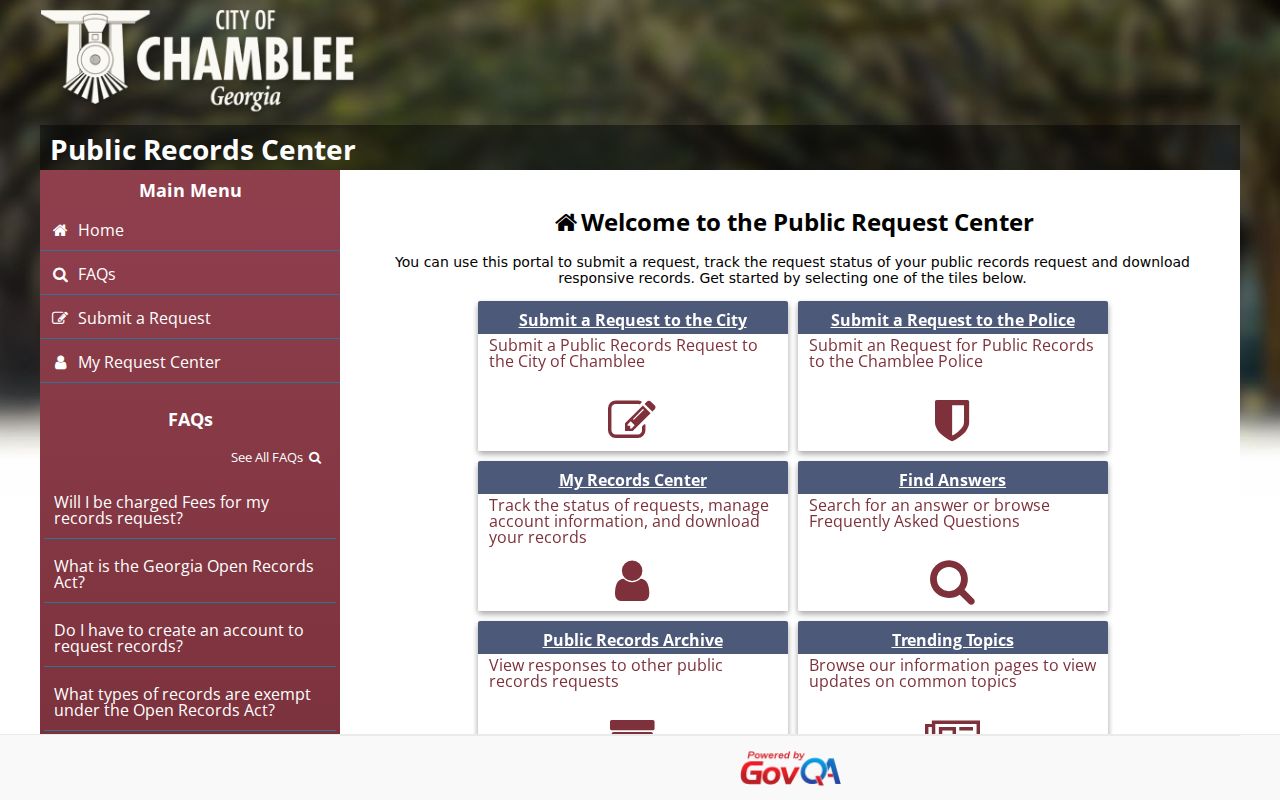
This fallback matters when a permit or older city-created file is not visible in the public portal.
Chamblee Annexation Shifts Past Records
Chamblee incorporated in 1908 around a half-mile rail-depot radius. Annexations in 2010 and 2013 helped expand the city from 3.18 square miles in 2010 to 7.69 in 2020. A present-day Chamblee parcel may therefore have older permits under county-only control, another postal city, or different directory geography. Keep current city limits, USPS identity, and historical coverage side by side.
Street names can shift too. New Peachtree Road was once Main Street. Deeds may rely on land lot, district, subdivision, lot and block rather than a current number. Search both names, inspect neighboring entries, and carry the parcel legal description across the change. A Sanborn map can help date footprint or numbering changes only after the exact Chamblee sheet and year are verified; the research did not establish a specific local run.
Close Chamblee Past Resident Trails
Probate, obituaries, cemetery records, and historical death certificates can connect a former owner or occupant to relatives and heirs. DeKalb Probate Court holds estate and will records subject to access limits. Georgia historical death certificates through 1943 are digitized through state archival collections. Local cemetery indexes include Chamblee Baptist, Nancy Creek Primitive Baptist, and Pierce Drive cemeteries.
Use these sources after the address and identity are anchored. An obituary can explain a disappearance from a directory; an estate deed can show how title passed; a cemetery record may distinguish two people with the same name. Living-person details deserve care. If a public portal has no file, ask the named custodian for the record series, date range, person, parcel, and case or book reference rather than asking the office to create a new history.
The DeKalb History Center house-research method brings parcel IDs, title abstracts, directories, maps, photos, newspapers, and oral histories into one locally grounded process. Oral-history DVDs begin in 1985 and can add neighborhood context when cited with care.
Lawful use. Research past occupants for house history, genealogy, heirs, or personal curiosity. Never use address findings to track, stalk, harass, threaten, or harm a living person.