
Finding Chamblee Residents by Record
Match the source to the fact you already have. A current address opens the DeKalb County appraisal roll and parcel map. An owner's name can run from the parcel card to the newest deed, then backward through the clerk's grantor and grantee index. A voter question belongs to Georgia My Voter Page. An old name or a former address belongs in city directory volumes, census schedules, newspapers, and archive files. No single source is a complete Chamblee residents directory. Each one answers a narrow question.
Ownership is not occupancy. The assessor may list a company, an estate, or an absentee owner, with renters and other household members unnamed. A court party, registered agent, permit applicant, or directory subscriber each fills a role that may not prove residence. Record the role, date, and source beside every name. Then hunt for a second record matching the address, parcel, case, or family link.
- Search the DeKalb property roll by owner, street address, or parcel ID.
- Use the parcel card's deed reference in the official records index.
- Check a court, business, or voter source only for the role it documents.
- Move to directories, census records, and newspapers for an older household.
- Send a narrow written request to the correct custodian when no index exists.
Use Chamblee records only for lawful personal research. Public access never permits stalking, threats, impersonation, or harassment.
Chamblee Residents Directory Offices
Chamblee is not the county seat. Decatur holds the rolls that identify owners and residents across DeKalb County. The Superior Court clerk records land instruments. The assessor tracks parcel ownership. Voter Registration and Elections keeps the county voter file. Chamblee City Hall is the right custodian for city permits and code cases. It also holds council records, police releases, and municipal-court files. That split prevents a common mistake: asking the city clerk for a deed or a county voter record the city never held.
DeKalb Superior Court Clerk
556 North McDonough Street
Decatur, GA 30030
404-371-2836
Landmark Official Records
DeKalb Property Appraisal
County parcel and ownership roll
DeKalb County, GA
Online and county assistance
Property Appraisal Search
DeKalb Voter Registration
County registration custodian
DeKalb County, GA
404-298-4020
Georgia My Voter Page
Chamblee Property Records Search
The DeKalb Property Appraisal search is the fastest official bridge. It connects an address to its parcel. Enter an owner name, property address, or parcel ID. A result can carry the situs address, the owner's mailing address, legal description, values, and building facts. It may also show exemption indicators, sale data, and a deed book and page. Situs simply means where the parcel physically sits. The mailing address is where tax notices go, and it may be far from Chamblee.
| Search field | Best use | Check afterward |
|---|---|---|
| Owner Name | Find parcels held by a person or entity | Name variants and mailing address |
| Property Address | Connect a street number to a parcel | Situs and normalized street spelling |
| Parcel ID | Return to the exact mapped tract | Legal description and deed reference |
The official property page shows why a parcel result is only a starting point, never proof of a household.
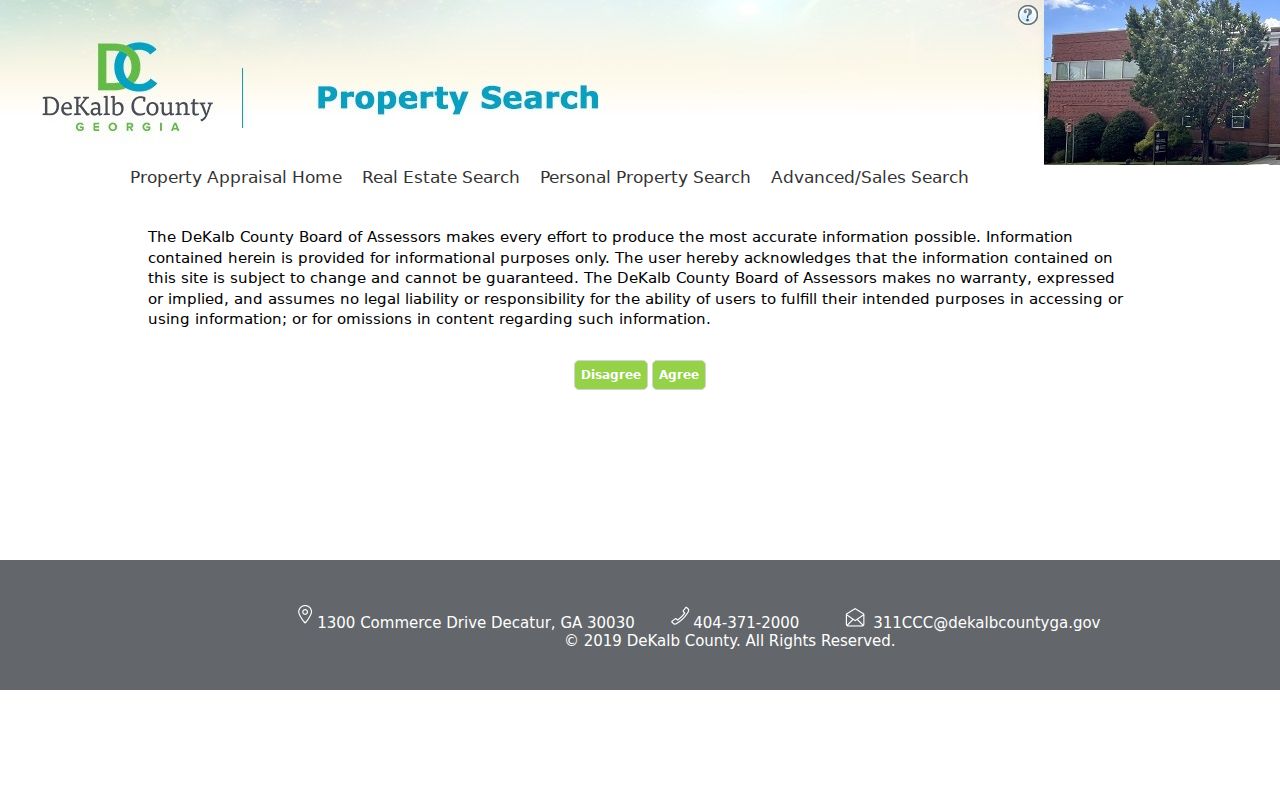
The screen supplies the address and owner inputs needed to pin down the correct parcel before deed or map work begins.
Map Chamblee Parcel Records
The DeKalb GIS land-records service layers parcel boundaries and map context. It also cross-links address and parcel ID. Mapping staff can turn those keys into the latest deed or plat book and page. The clerk, not GIS, issues the deed copy. County mapping is also no substitute for a survey. It cannot settle an encroachment or boundary dispute.
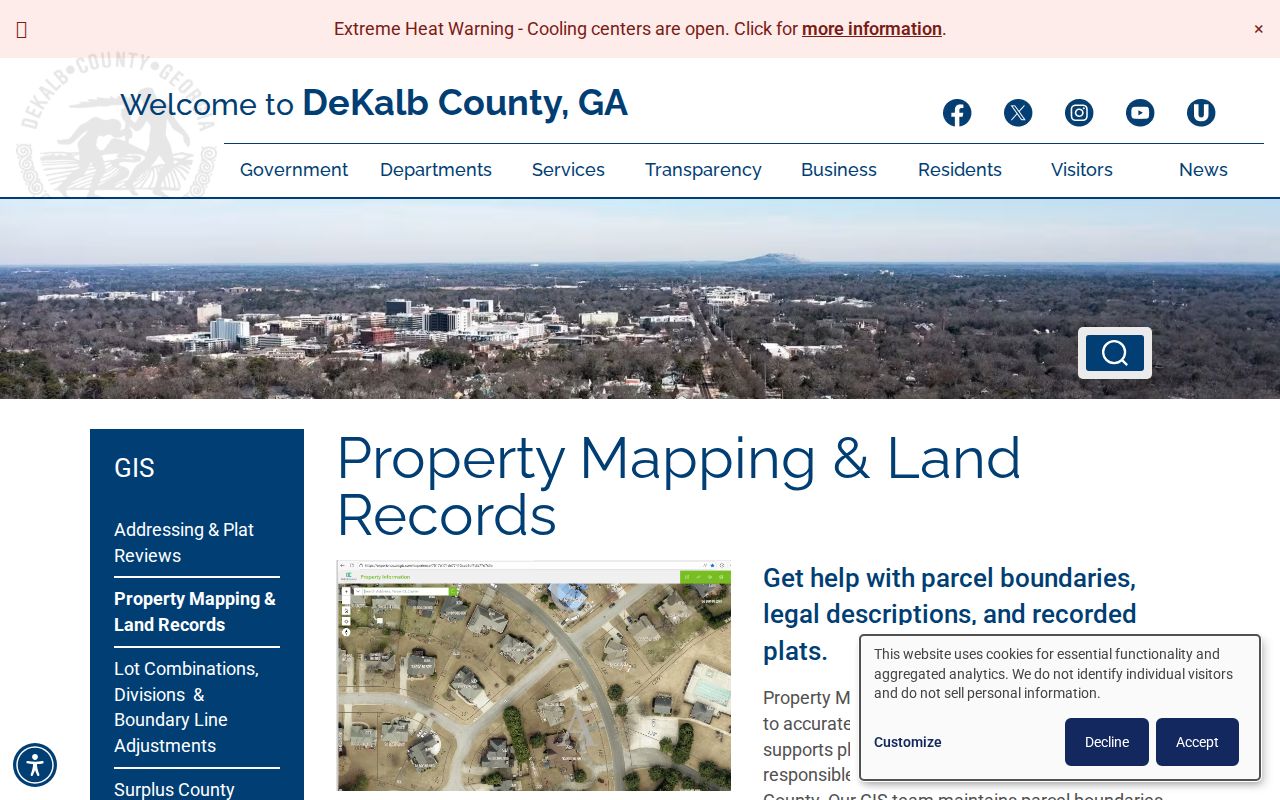
That division of work pays off. GIS identifies the tract and its record reference, while the Real Estate Division supplies the recorded instrument.
- Parcel
- A county-defined tract used for assessment and mapping.
- Index
- A finding tool that points to a record but is not the certified record.
- Plat
- A recorded drawing that depicts lots, dimensions, or subdivisions.
- Roll
- A maintained list, such as an assessment or voter roll, created for an official purpose.
Chamblee Deed Records Since 1979
The Landmark Web Official Records Search publishes online coverage starting in 1979. You can search by name, document, book and page, parcel ID, record-date range, instrument number, or indexed legal-description terms. A result can name parties and their roles, document type, recording date, instrument number, book and page, legal index data, the parcel ID when supplied, and an image link where one exists.
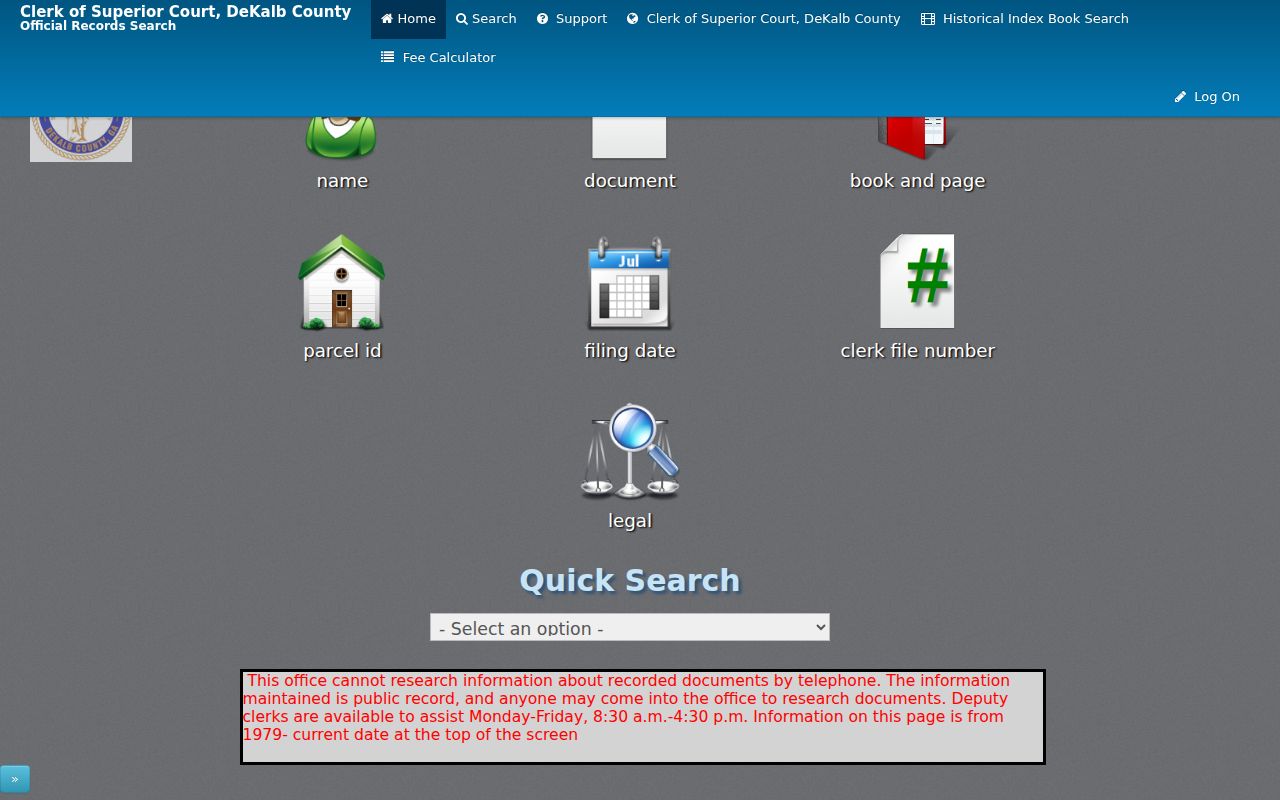
Those varied search modes support both name-led inquiries and parcel-led deed chains. A grantor transfers an interest; a grantee receives it.
Older trails predate 1979. For those, use the physical grantor and grantee indexes and deed books at the courthouse. Anyone may research there, and deputy clerks keep a published weekday schedule. The statewide GSCCCA search is another channel with limited and paid tiers. Meanwhile, the courthouse public-access room remains the no-subscription fallback.
Chamblee Records at DeKalb Clerk
The DeKalb County Clerk of Superior Court keeps the deeds, security deeds, liens, plats, and Superior Court records. Search rows point the way. But the image or certified copy establishes what a filing actually says. The clerk lists counter and mail routes alongside online access. Mail requests for real-estate copies need the correct book type plus book and page. So index work comes first.
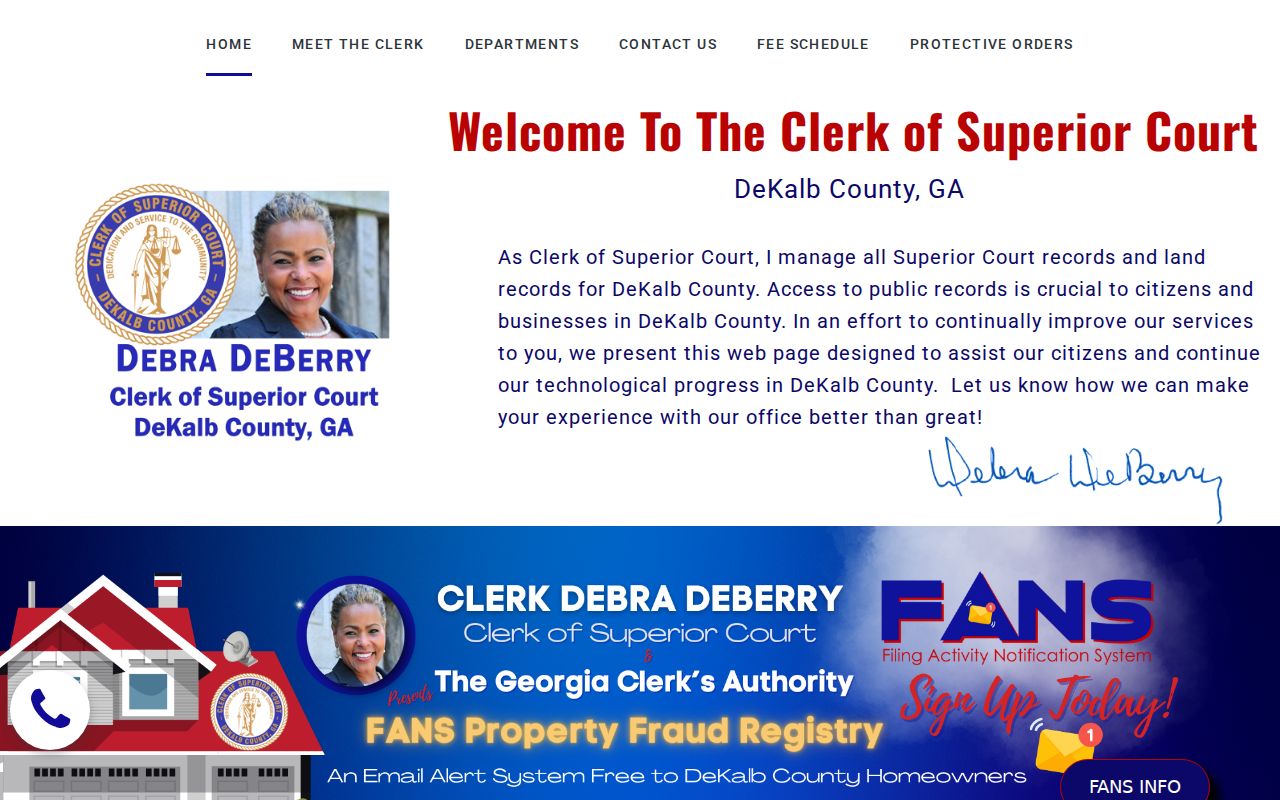
Confirm current hours, copy charges, certification rules, and filing procedures on the clerk site before any visit or request.
The clerk's real-estate filing page also explains Georgia's electronic-filing change that took effect in 2025.
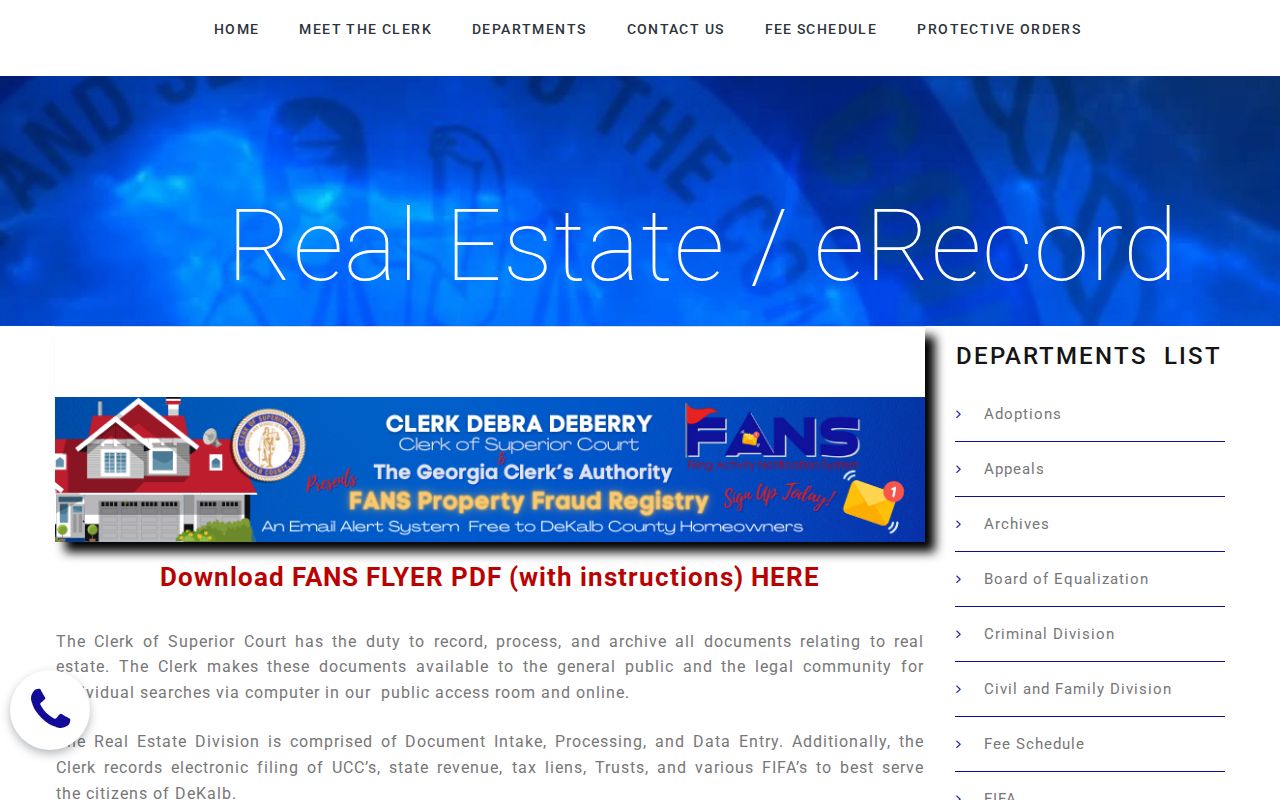
Mandatory electronic submission changed how instruments get filed, not the public's inspection routes through the clerk and the official indexes.
Current Chamblee Residents Directory Sources
Chamblee's official lists are organized by government task, not household. The property roll identifies owners and taxable parcels. Voter files add a public layer of registration fields, subject to protected-address rules, while My Voter Page serves as a voter-specific identity check. Deeds name parties to land filings. City permits identify owners, applicants, contractors, work, and dates. Civic contacts show association officers or meeting channels, but no authoritative household roster exists for Chamblee groups.
| Source | Who It Lists | Keeper | Access |
|---|---|---|---|
| Property appraisal roll | Parcel owners | DeKalb Property Appraisal | Free public search |
| Public voter list | Public fields for registered voters | DeKalb Elections / Georgia SOS | Custodian request and state rules |
| Landmark records index | Parties to deeds, liens, and plats | Superior Court Clerk | Free index from 1979 |
| City permit and code files | Owners, applicants, contractors | Chamblee Planning / City Clerk | Portal or records request |
| Civic association contacts | Public officers and meeting contacts | Individual organizations | No verified public member roll |
Pick the roll that fits the role. An assessor result supports ownership, a deed supports a recorded transfer, and a permit supports work tied to an address. None alone proves every person in a home. Chamblee's reported owner-occupied rate of 39.7 percent is a strong warning that ownership records omit many resident households.
| Source type | Strength | Main limit |
|---|---|---|
| Official custodian roll | Defined role, date, and correction path | Created for one government purpose |
| Commercial people-finder category | May combine several sources | Can be stale, merged, or unclear |
Let a certified custodian settle any fact that matters. A commercial compilation is not a certified record, and it may offer no clear way to tell two similarly named people apart.
Verify Chamblee Voter Records
The Georgia My Voter Page asks for personal matching details. It returns a voter's registration status, polling place, districts, and sample-ballot material. It is not a by-street list. Public voter lists are a separate product requested from the election custodian, covering names and residence addresses that may be public. Full birth dates, identification numbers, and protected addresses stay withheld.
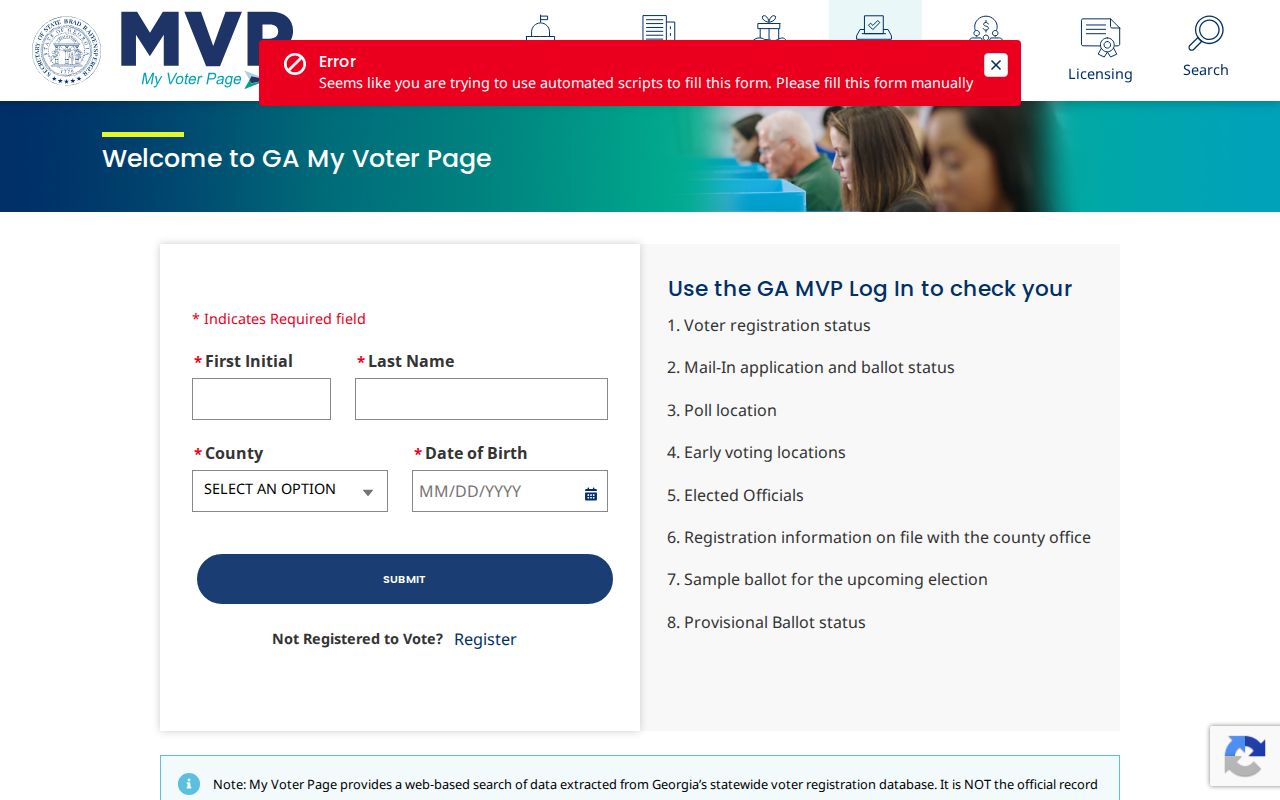
The form's identity fields show its purpose: a voter checking their own record. VoteSafe separately shields qualifying addresses. Georgia's Safe at Home program adds a substitute public-record address. It also provides mail forwarding for eligible participants.
DeKalb officials warned residents in July 2026 about third-party registration mail. They urged voters to separate it from official election notices. Confirm status through My Voter Page or the county office. Skip the unsolicited letter.
The official DeKalb voter-mailing warning points voters to verified channels.
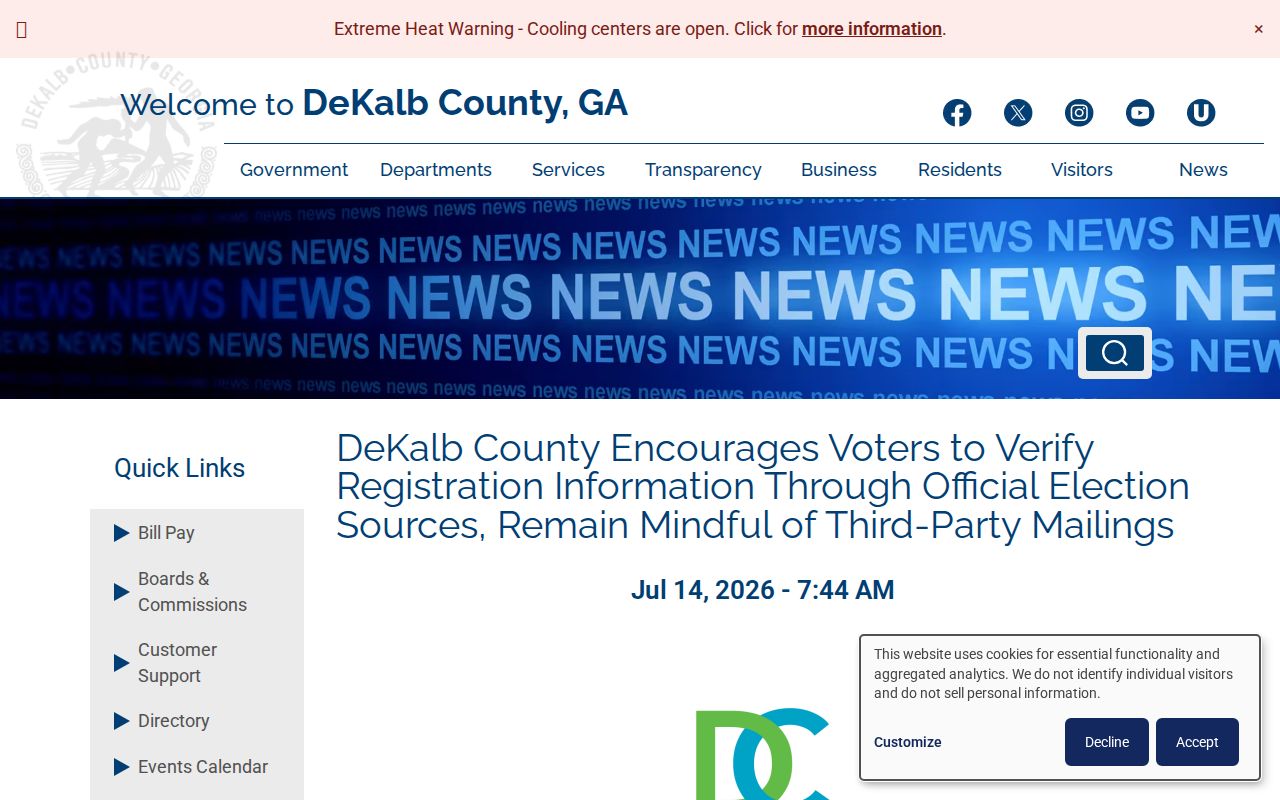
The notice draws a sharp line. DeKalb also posted municipal election reminders in 2025, listing official voting locations and key verification routes for Chamblee voters.
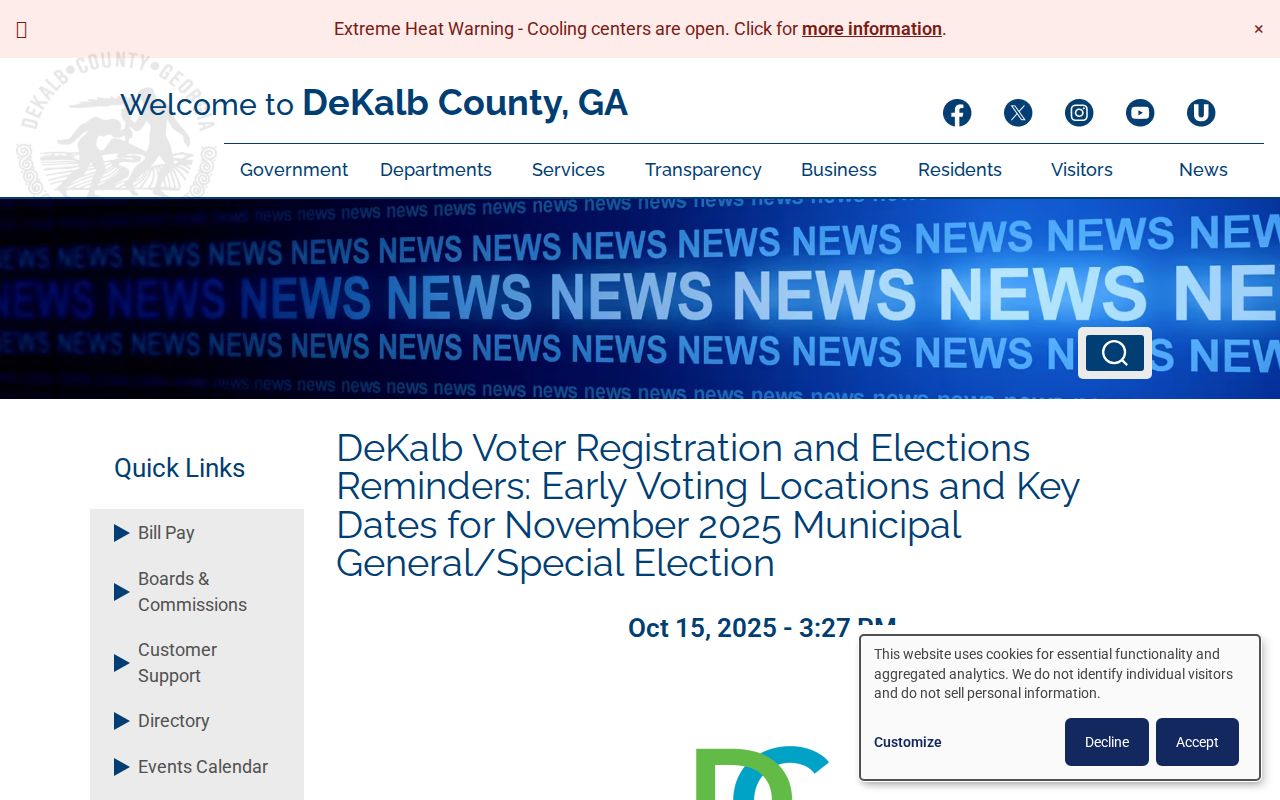
Use the linked county source for each current election schedule.
Confirm Chamblee Court Records
A Chamblee name can appear in several courts. Municipal Court handles ordinance and traffic matters. DeKalb Magistrate, State, Superior, and Probate courts each keep their own classes of files. The Georgia court records search and the Judicial Council's eAccess links are finding tools, not one complete statewide file.
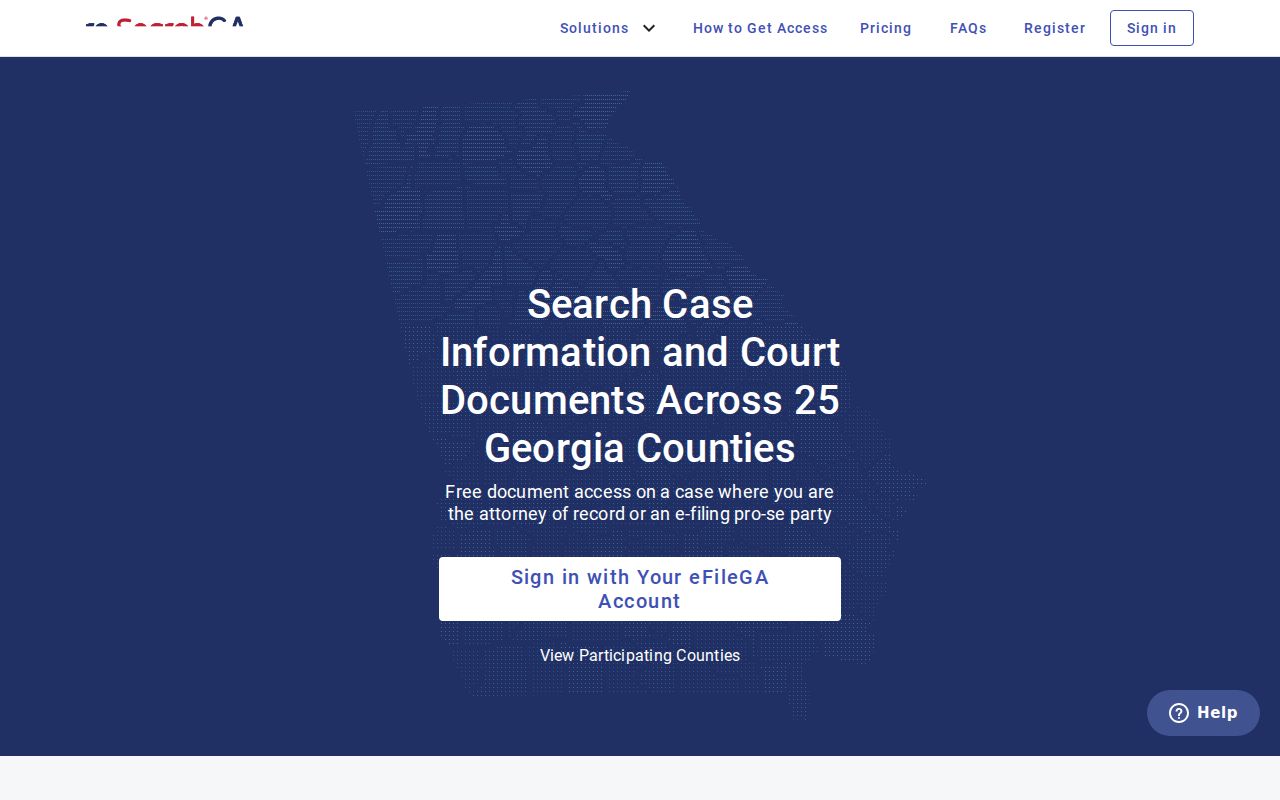
A posted result may show the court, case number, caption, filing date, case type, party roles, docket events, judge, and status. Match a name to another identifier first. A shared name is not the same person. Pleadings and certified dispositions come from the clerk, and sealed or restricted material stays unavailable. The current Tyler public portal covers participating DeKalb courts.
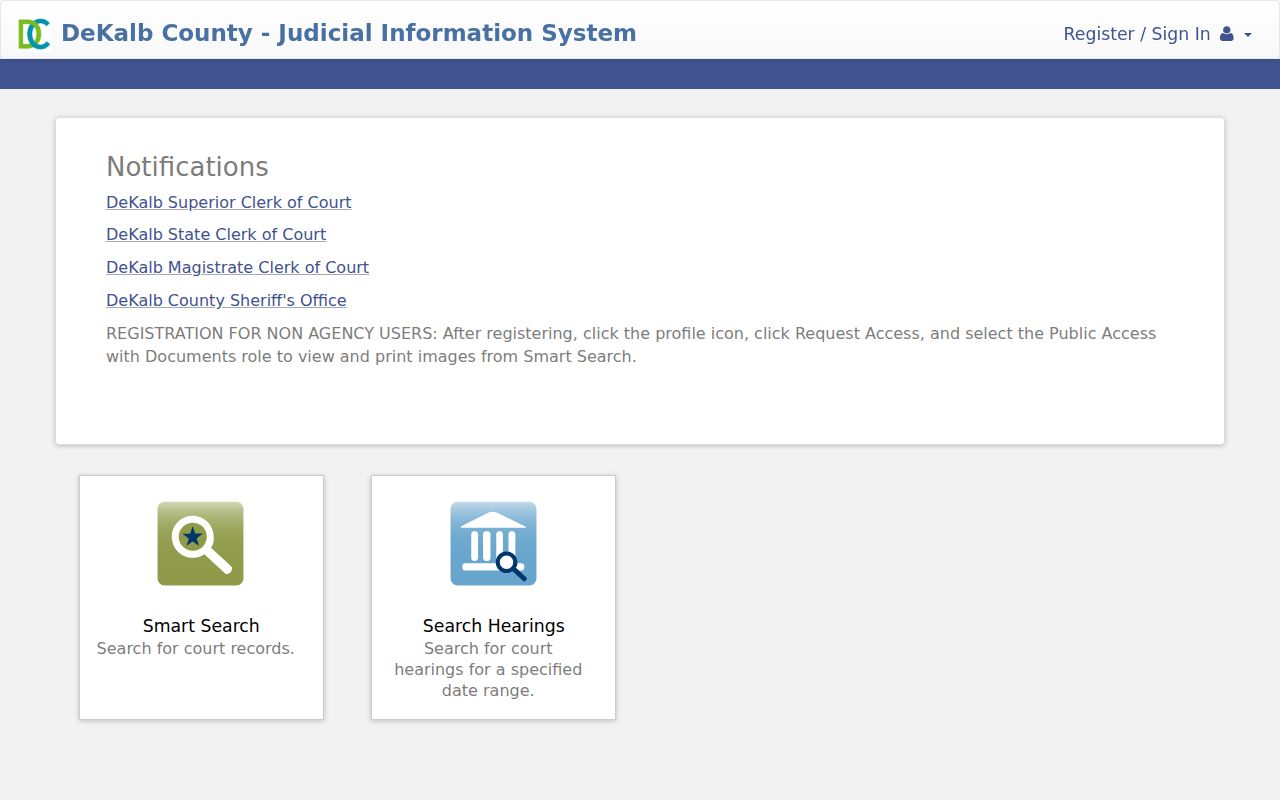
Some portal functions require an account. The clerk stays the file custodian, and the Georgia eAccess directory explains how provider and custodian duties split.
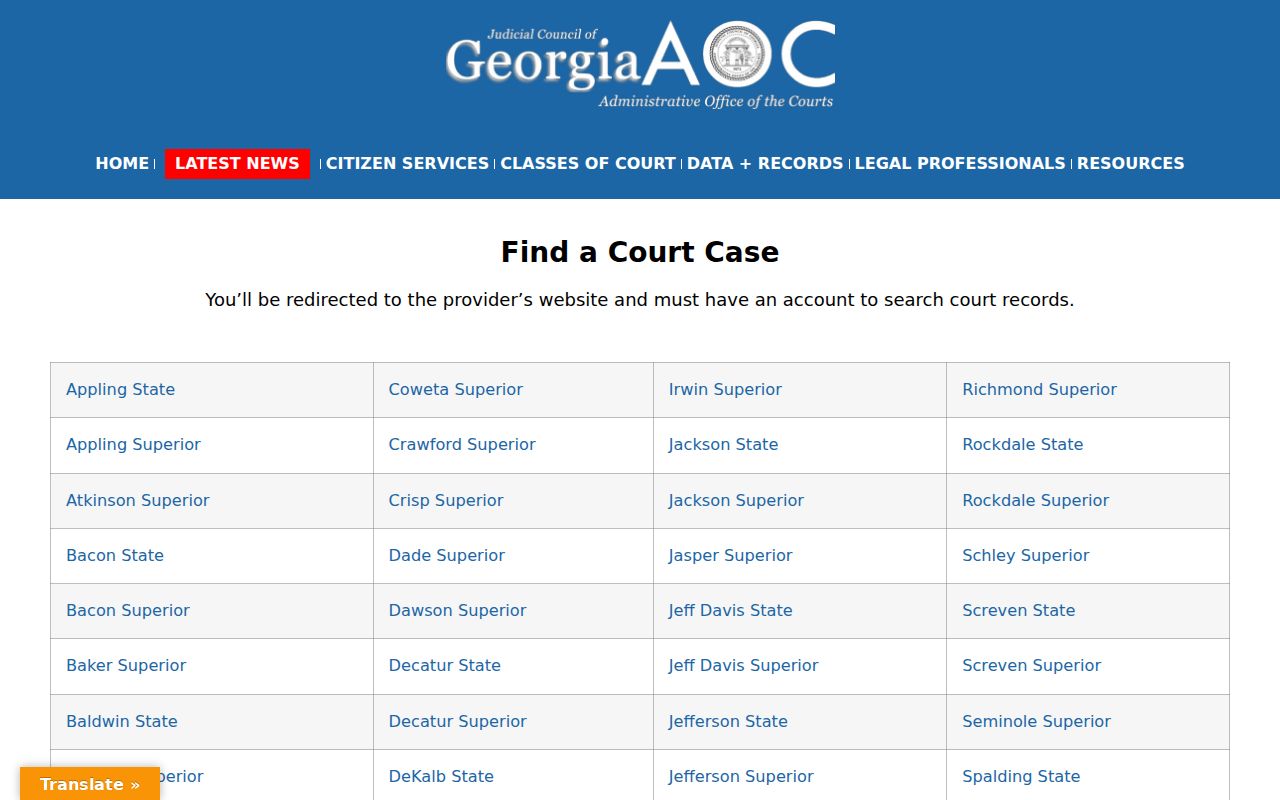
Each court clerk remains the authority for the file itself.
Request Chamblee City Records
City-created evidence belongs with Chamblee. The GovQA route splits City and Police requests. It supports submission and tracking, and keeps an archive of prior responses. Planning and Development uses iWorQ for permits and inspections. A permit can name an owner, applicant, contractor, project description, and date at an address. Permits prove a building change better than residency.
For unposted records, describe the series, date range, address, case or permit number, and preferred electronic format. The Georgia Open Records Act, O.C.G.A. §§ 50-18-70 through 50-18-77, applies. The custodian generally responds within three business days. The response produces available records or explains timing, cost, or a cited exemption. The agency supplies existing records and need not create a new directory.
Official Chamblee Safety Records
Some statewide sources list people for a narrow purpose. The Georgia Department of Corrections offender query tracks state custody and supervision only. It is not a general residents directory and does not show who currently occupies a Chamblee address.
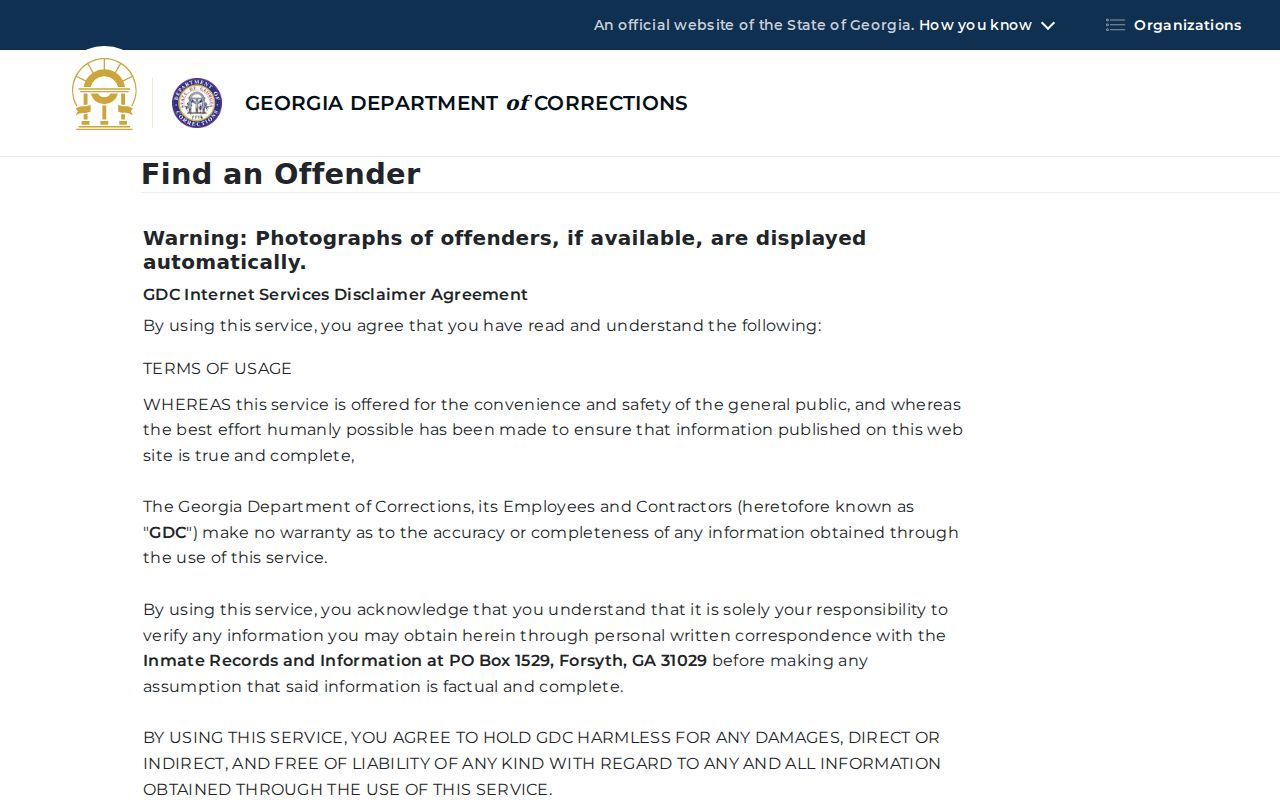
Read the form by its own fields. Status labels carry specific meanings. Never infer identity from a shared name, and treat the Georgia Bureau of Investigation registry as another purpose-limited official resource with its own statutory scope.
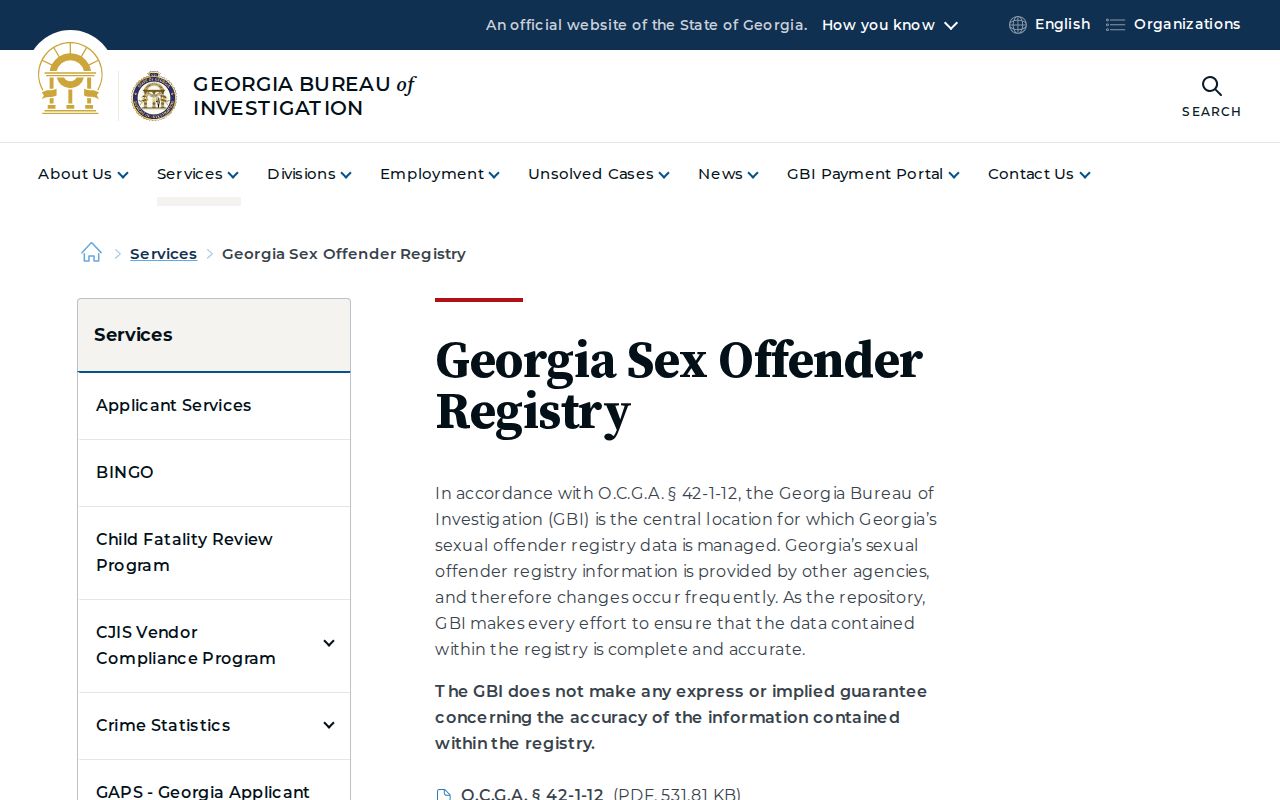
Use the registry's own notices and agency contacts. A specialized safety source should never become a claim about an unrelated Chamblee person or household.
Historical Chamblee Residents Directory Trails
Old Chamblee listings survive in several area archives. The DeKalb History Center holds selected Atlanta and suburban directory volumes. It also keeps the lone DeKalb-only volume, dated 1939. The DeKalb County Public Library genealogy collection adds Atlanta directory microfilm, state registers, census material, and newspaper microfilm. Fulton Central Special Collections holds the Haines address-first criss-cross volumes from 1946 through 2016/17. Chamblee telephone directories exist too. The Library of Congress holds confirmed Chamblee issues from the 1940s through the 1970s.
A standard entry may give a name, spouse, occupation, employer, address, and short codes explained in that volume. A reverse directory flips that order. It begins with the street and house number. Treat either format as evidence of what a publisher associated with an address during compilation, not a full household census. Pair the 1939 DeKalb volume with the 1940 census. Obituaries, probate, deeds, or later volumes can explain a disappearance.
Chamblee Records Cross Three Geographies
Modern Chamblee stretches far past its first half-mile radius around the rail depot. Annexations in 2010 and 2013 grew the city. It went from 3.18 square miles in the 2010 census to 7.69 in 2020. That growth matters for records. The right municipal office for an old permit or code file depends on where the line sat. It hinges on where the paper was filed. The boundary change never made anything agree. USPS delivery names, county records, and historic directory labels still do not match the new city line.
Keep three labels straight. One is today's incorporated city, another the postal identity used on the mail. The third is the county or directory geography in force when the record was created. The historic downtown, the Buford Highway corridor, and post-annexation areas can each leave a different paper trail. Street names shift too. New Peachtree Road was once Main Street. An old street name and the parcel's legal description can matter as much as the current address.
Record gaps complicate the work. A courthouse fire struck in 1842. It destroyed nearly all early DeKalb records. One official Superior Court volume is reported to have survived. Later deed recitals, cemetery records, family papers, newspapers, directories, and the 1936–40 Chamblee-area voter oath sheets can bridge parts of that loss. Still, the chain stays incomplete.
The voter oath sheets are a rare prewar Chamblee-area resident roll. The DeKalb History Center holds originals from 1936 through 1940. They cover districts including Chamblee, Cross Keys, Doraville, and Shallowford. An oath may list an address, occupation, birth date, and transfer or tax paperwork. Access is by archive appointment. Do not confuse the sheets with today's county voter file. They can still place a named adult in the prewar community. That helps when the 1939 directory or a census leaves doubt.
Other collections explain brief appearances. A person may also show up under a wider regional label. Camp Gordon opened near Chamblee in 1917. It trained about 30,000 recruits. The site later became Lawson General Hospital, then Naval Air Station Atlanta, and finally DeKalb-Peachtree Airport in 1959. Military records, camp photographs, and airport material can explain short stays that ordinary Chamblee resident directories miss. The Digital Library of Georgia holds a 1946 aerial of the naval air station. Camp Gordon construction photographs are there too.
The History Center keeps more. Its Chamblee holdings include subject files, community newsletters, oral histories, photographs, and cemetery references. The William Black collection covers Chamblee High School from the late 1940s through the late 1960s. The Ruth Bean and Musicland material preserves photographs, letters, and local ephemera from the 1950s and 1960s. These sources add context and relationships. A caption or oral account should still be checked against a dated official record. That check matters most with shared names.